Sensor size and crop factor: why your 50 mm lens doesn't always feel like a 50
By Jeff Beem
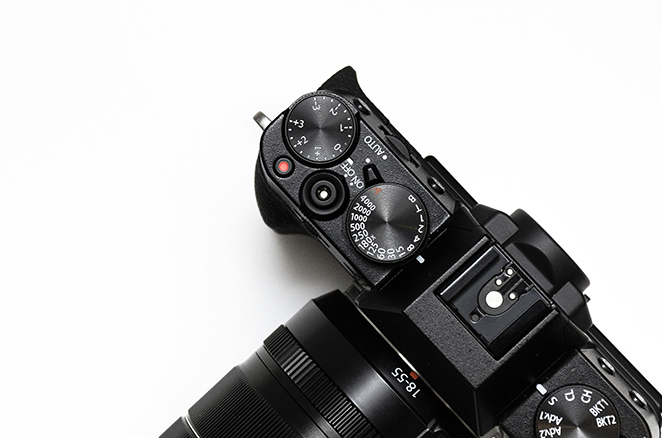
Someone hands you a 50 mm lens and says it is a “normal” lens. You screw it onto an APS-C body, raise the camera, and the world looks a little tighter than you expected. Nothing is broken. The lens really is 50 mm. Your sensor is just seeing a smaller rectangle inside the image circle, so you get less of the scene. Photographers summarize that squeeze with one number: crop factor.
Once you know how to read it, lens shopping, framing, and those endless forum arguments about full frame versus crop make a lot more sense.
What crop factor is (and what it is not)
Crop factor is a ratio. In almost every discussion online, people measure it against 35 mm full frame (about 36 × 24 mm). Take the diagonal of a full-frame sensor, compare it to the diagonal of your sensor, and divide:
Crop factor = (full-frame diagonal) / (your sensor diagonal)
So a sensor whose diagonal is half of full frame has a crop factor of about 2×. That is the ballpark for Micro Four Thirds. Common APS-C bodies land near 1.5× (many Nikon, Sony, Fujifilm, Pentax) or 1.6× (Canon APS-C). A few specialty formats differ; our Crop Factor Calculator lists the usual presets with real sensor dimensions so you are not guessing.
Crop factor is not a quality score. It does not mean “professional” or “beginner.” It is simply a way to predict field of view when you already think in full-frame focal lengths.
Larger than full frame exists too (medium format digital backs and bodies). There the ratio drops below 1× if you still use full frame as the reference. Same idea, just in the other direction: you see more width and height in the frame at the same focal length.
The one conversion everyone memorizes
Equivalent focal length (the “35 mm equivalent” you see in reviews) is:
Equivalent focal length = actual focal length × crop factor
Example: 50 mm on 1.5× APS-C frames like 75 mm on full frame. The glass did not morph into a portrait lens. The camera is cropping the projected image, so you step back or zoom out mentally if you want the same framing you would get on full frame.
That single multiplication is why wildlife and sports shooters often love smaller sensors: a 200 mm on 2× Micro Four Thirds gives the angle of view of about 400 mm on full frame without a longer, heavier lens.
Depth of field and “equivalent aperture”
Here is where forums get loud. Aperture numbers on the lens (f/2, f/2.8) still control exposure the same way: they set how much light hits the sensor for a given shutter and ISO. They also still control optical behavior of that lens.
What changes, when you compare the same framing across sensor sizes, is depth of field. To match both framing and field of view, you stand in a different place or pick a different focal length. The combination that matches full-frame look is often summarized as an equivalent aperture for depth of field:
Equivalent aperture (for DoF) = f-number × crop factor
So 50 mm f/1.8 on 1.5× APS-C behaves similarly, for framing and background blur, to about 75 mm f/2.7 on full frame. Your f/1.8 did not stop being f/1.8 for exposure. It is still collecting light like f/1.8. The “equivalent” is a comparison tool, not a sticker you paste over the barrel.
If you shoot the same subject from the same distance with the same focal length and same f-number on two sensor sizes, the smaller sensor shows a tighter crop, not magically deeper focus by itself. The useful shorthand above is for when you reframe to show the same composition.
Noise and the ISO square
Photography teachers sometimes mention equivalent ISO. The idea is rough: if you shrink the sensor while keeping technology similar, you often need more gain (higher ISO) for the same brightness, and noise tends to climb. A simple comparison model squares the crop factor:
Equivalent ISO (noise comparison) ≈ ISO × crop factor²
Example: ISO 100 on 1.5× is sometimes talked about like ISO 225 on full frame in noise terms, not exposure terms. Real cameras do not line up perfectly because sensor generation, microlenses, and processing matter enormously. Treat this as intuition for comparing formats, not a law of physics you take to court.
The calculator on this site shows equivalent focal length, equivalent aperture for depth of field, and this ISO-style comparison together so you can see the whole picture for your preset.
Field of view without the drama
Field of view is geometry. For a rectilinear lens, the angle captured along an edge of the sensor follows:
FoV = 2 × arctan(sensor side / (2 × focal length))
Smaller sensor, same focal length: narrower angle. That is the whole story behind “my wide angle isn’t wide anymore” when you move from full frame to crop. The Crop Factor Calculator prints horizontal, vertical, and diagonal angles for the sensor you select, which is handy when you are choosing between two kits for travel or astro.
If you are pairing this with long exposures or night work, our posts on ND filters for daylight long exposure and time-lapse interval math sit in the same mental toolbox: focal length and sensor shape still decide what fits in frame when the shutter stays open.
What I actually do in the field
Match language to the body you hold. If you learned on full frame, multiply by crop when you shop for crop bodies. If you only shoot one system, you can ignore equivalents forever and think in native focal lengths.
Do not buy or sell gear purely on crop math. Ergonomics, weather sealing, lens lineup, stabilization, and what you like to carry matter more than a thread about “full-frame look.”
When you need the numbers, use the tool. Stack a few focal lengths and apertures in the Crop Factor Calculator, flip between APS-C and Micro Four Thirds, and the comparison table shows how the same lens renders across common formats without hand arithmetic.
Sensor size explains a slice of the image. Light, timing, and where you stand explain the rest.
Sources
- Image sensor format (sensor dimensions and naming).
- Crop factor (definition relative to 35 mm still format).